

What is the difference between coconut shell activated carbon for water purification and coal-based water purification charcoal?
In the field of water treatment engineering, coconut shell activated carbon for water purification and coal-based activated carbon are the two most widely used types of granular activated carbon filter media. Due to differences in raw materials and production processes, they exhibit distinct variations in adsorption performance, suitability for specific water qualities, and operating costs. This article provides a detailed comparison of the core differences between these two product types, analyzes the selection logic and supply advantages of high-grade activated carbon for water purification, and offers a reference for various water treatment projects.
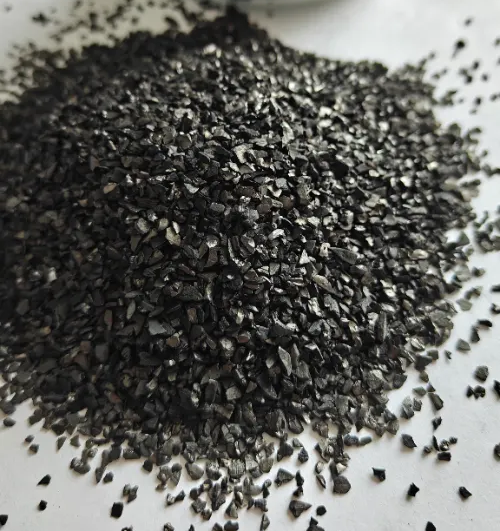
I. Raw Materials and Pore Structure: The Root of Performance Differences
Coconut shell activated carbon for water purification is produced from natural coconut shells using physical activation and refining processes. Its pore structure is dominated by micropores—characterized by fine, concentrated pore sizes—enabling exceptional adsorption of small-molecule organic compounds, residual chlorine, odors, and certain heavy metals. Products meeting the industry's "Class A" standard typically achieve an iodine value exceeding 1000 mg/g, an ash content below 5%, and mechanical strength ≥96%; with low impurity levels, they significantly improve the taste of the treated water.
Coal-based activated carbon is produced from anthracite coal and features a pore structure comprising micropores, mesopores, and macropores. With a broader overall pore size distribution, it excels at removing large-molecule organic compounds, color, and COD (Chemical Oxygen Demand). However, standard coal-based carbons typically have iodine values in the 800–900 mg/g range, higher ash content, and more inorganic impurities; they are prone to releasing fine carbon dust during backwashing, making them better suited for pretreatment stages where water quality requirements are less stringent.
II. Comparison of Application Scenarios and Comprehensive Operating Costs
Regarding application scenarios, coconut shell activated carbon for water purification is better suited for projects demanding high effluent quality, such as drinking water purification, high-purity water production, water for food and beverage processing, and reverse osmosis pretreatment. Conversely, coal-based activated carbon offers superior initial cost-effectiveness for high-flow scenarios—such as industrial wastewater treatment, circulating water filtration, and tertiary sewage treatment—where the primary objectives are decolorization and COD reduction. In terms of cost, high-quality coconut shell activated carbon for water purification has a slightly higher unit purchase price but offers greater adsorption capacity, a longer service life, and high performance retention after regeneration, resulting in a more favorable total cost of ownership over the long term. Conversely, coal-based water purification carbon requires a lower initial investment but reaches adsorption saturation quickly and necessitates more frequent replacement, making it suitable for short-term projects with limited budgets.
III. China Huajing: Ensuring a Stable Supply of High-Quality Water Purification Carbon
China Huajing is a seasoned domestic manufacturer deeply rooted in the activated carbon industry. Established in 1997, the company covers an area of 300 mu (approximately 20 hectares) with a total investment of 800 million RMB. It operates three major "carbon-heat co-production" bases—Chengde Huajing, Luanping Huajing, and Hainan Huajing—boasting an annual activated carbon production capacity of 40,000 tons and the ability to ensure stable, large-scale supply.
Huajing's coconut shell activated carbon for water purification is refined from premium coconut shell raw materials using a physical activation process. It features high abrasion resistance, strong adsorption performance, and high adsorption capacity, with all technical indicators meeting the industry's "Class A" standards. It performs exceptionally well in the production of purified water and high-purity water, serving as an ideal filtration medium for power plants, water treatment facilities, and the beer, beverage, and high-purity water equipment sectors. Leveraging its full-industry-chain layout and the advantages of carbon-heat co-production, the company guarantees consistent product quality and controllable delivery schedules, providing reliable filtration media support for a wide range of water purification projects.